Research
Grounding robotic policies in perception, language, and touch, with a focus on contact-rich manipulation, tactile sensing, and assistive systems.
Publications
preprint
Mask-Conditioned Voxel Diffusion for Joint Geometry and Color Inpainting
arXiv →
conference
A Sensing Device For Real-Time Road Condition Monitoring
Paper →
conference
3D Modelling of Human Hand Using Instrumented Gloves
Paper →
Research Projects
Visuo-Tactile World Models for Robot Policy Learning
ARM Lab · Prof. Monroe Kennedy III
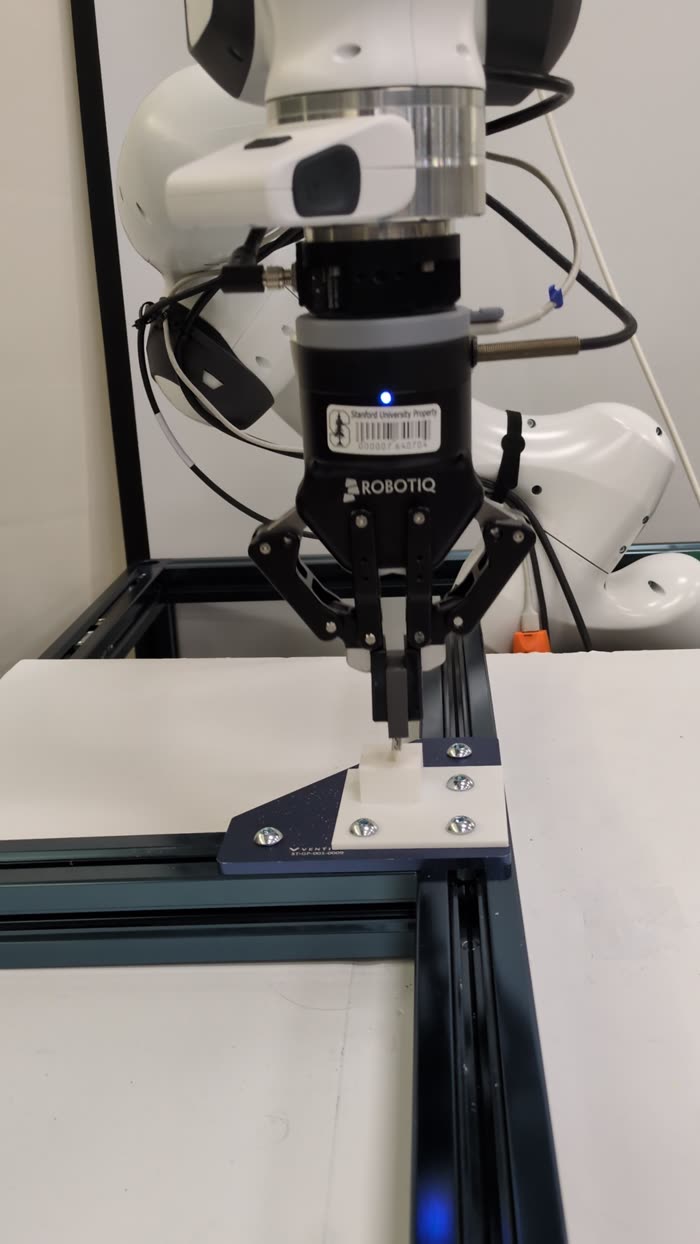
Training action-conditioned visuo-tactile world models for contact-rich manipulation, using DenseTact sensors and a custom UMI-style gripper to collect multimodal demonstrations.
T-SAFE: Tactile Failure Diagnosis and Recovery for Robotic Assembly
Independent Research, Stanford University
A tactile-aware recovery framework that diagnoses failures such as micro-slip, misalignment, and grasp voids in contact-rich nut assembly, with sim-to-real deployment on SO-101.
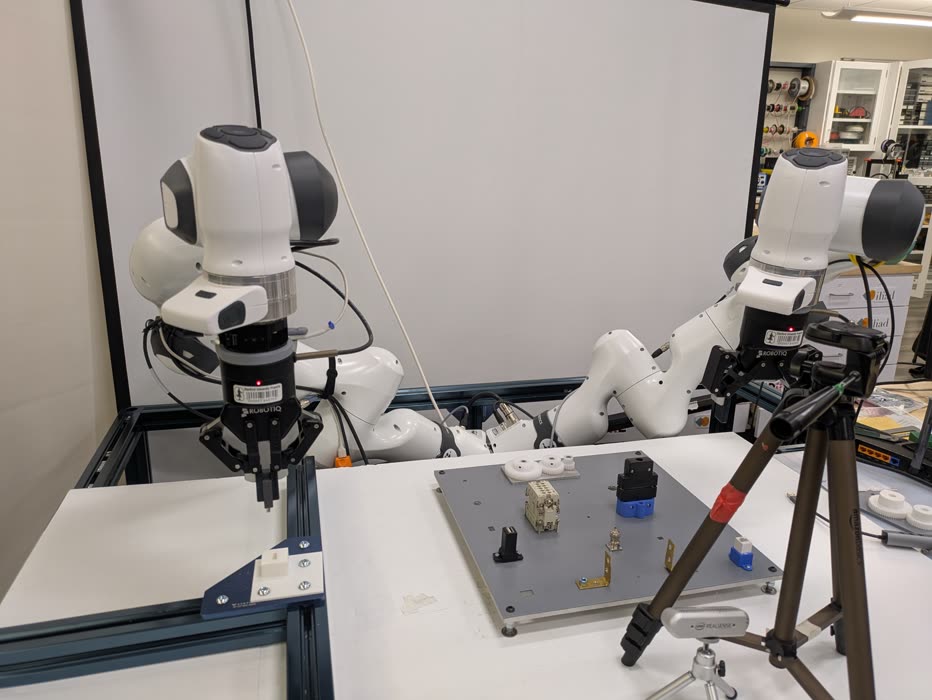
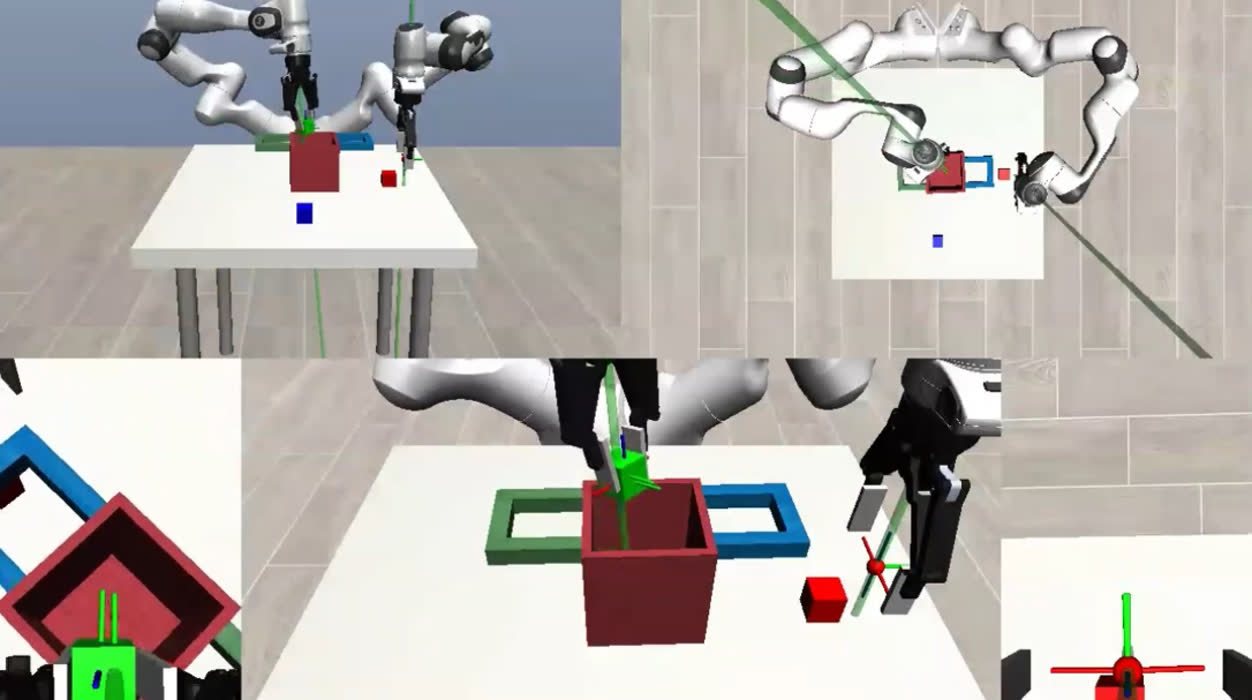
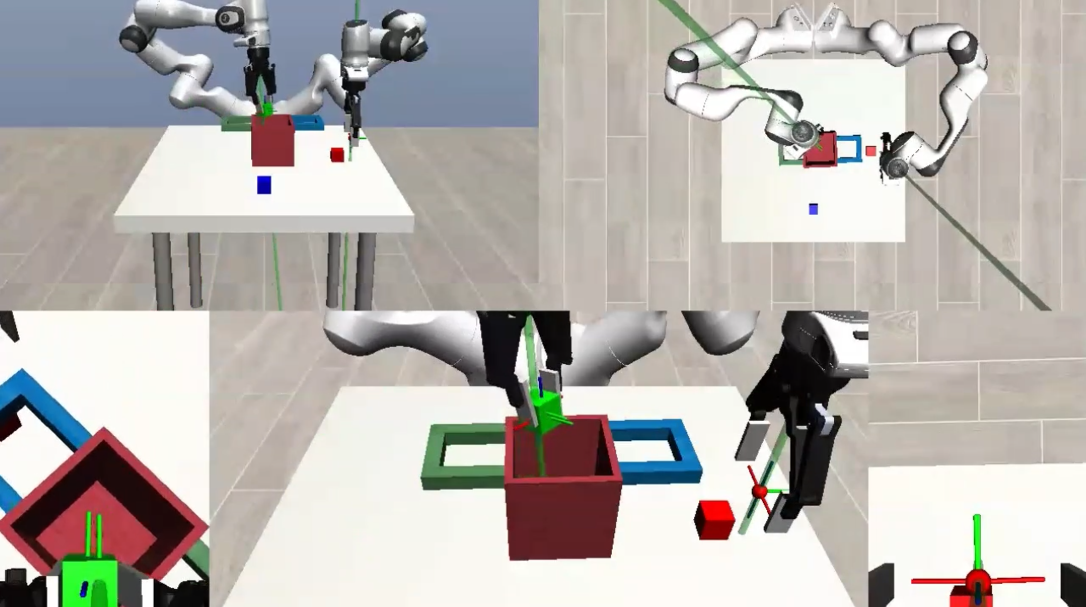
Bimanual Robotic Assembly with Contact-Rich Manipulation
Interactive Perception and Robot Learning Lab (IPRL) · Prof. Jeannette Bohg
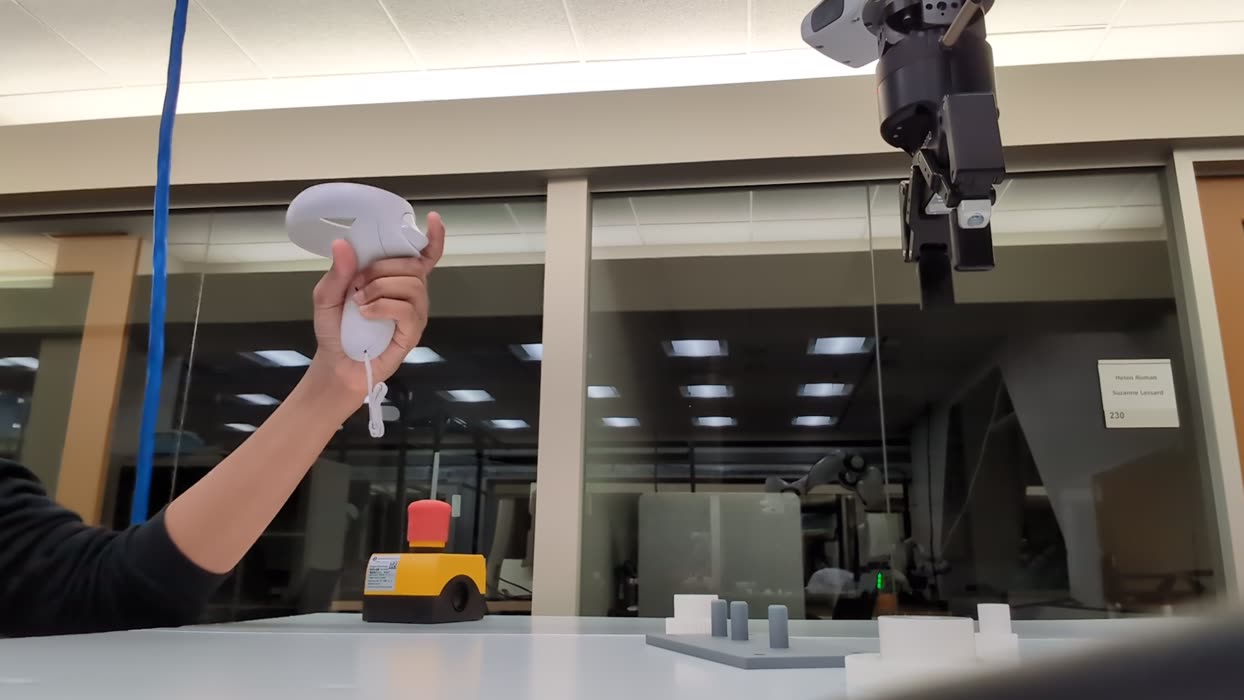
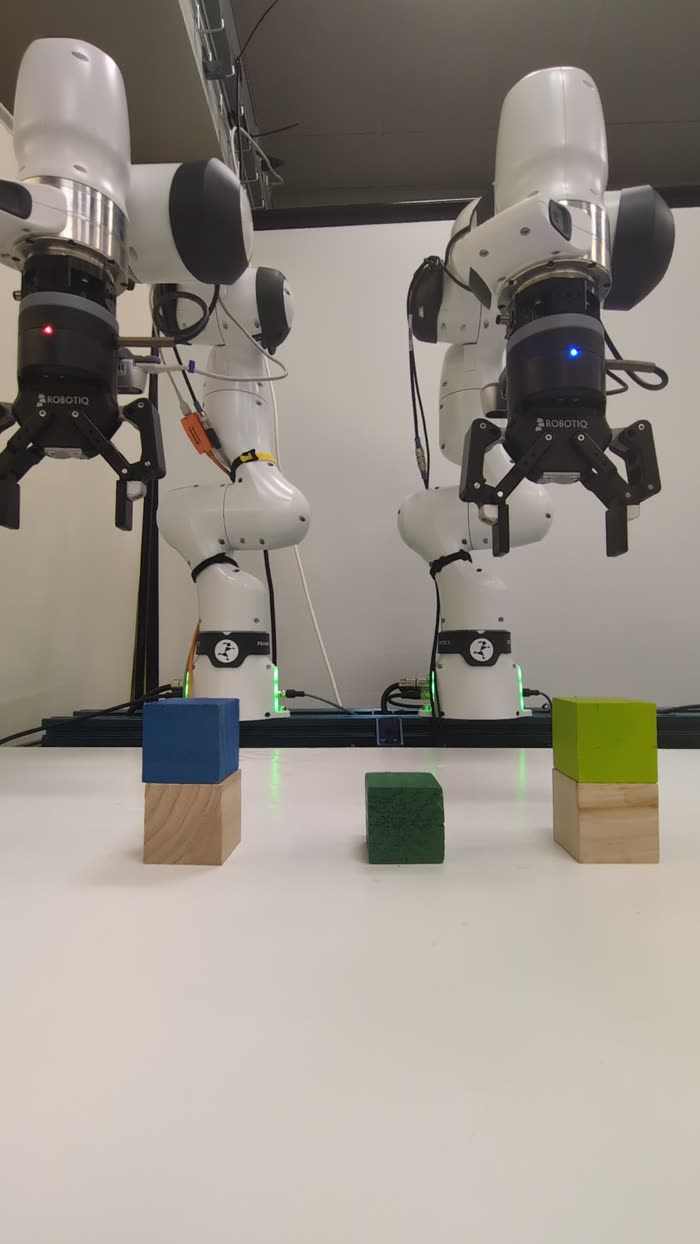
Built a full teleoperation and data pipeline for dual Franka arms and trained diffusion, SERL, and HIL-SERL policies for contact-rich assembly tasks.
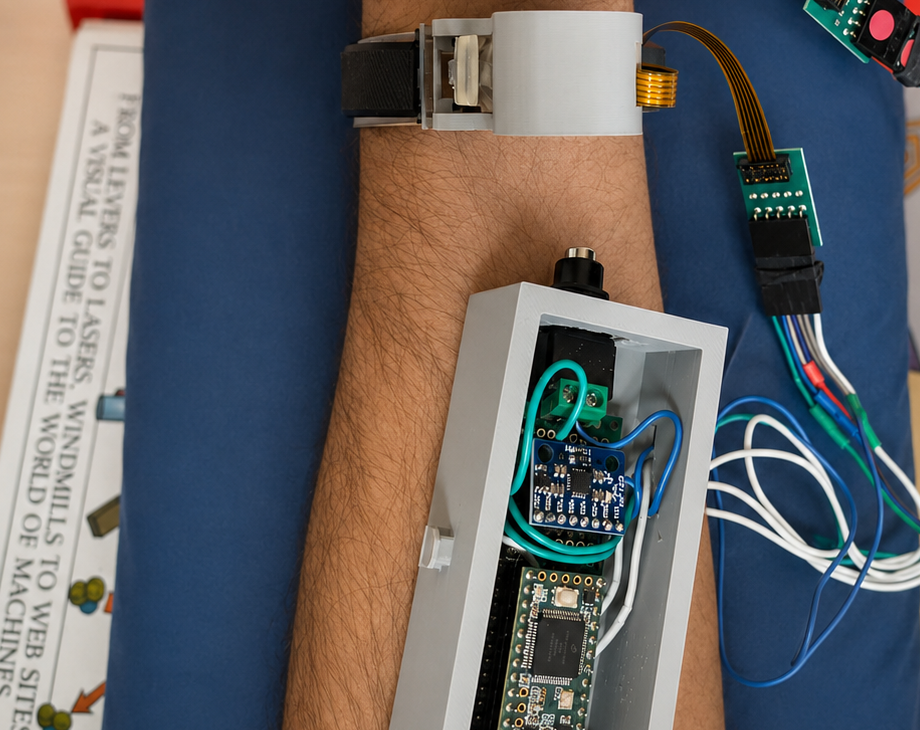
Haptic Interface Design for Robot Proprioception and Control
Collaborative Haptics and Robotics in Medicine Lab (CHARM) · Prof. Allison Okamura
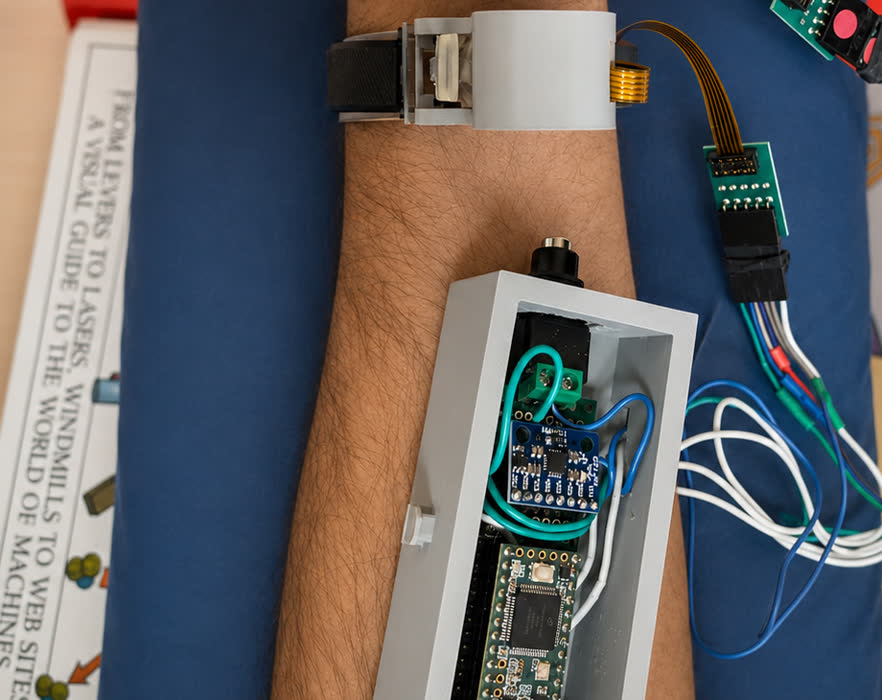
Engineered a wearable haptic feedback system with dual linear actuators for real-time proprioceptive experiments, validated with motion capture and flex sensors.
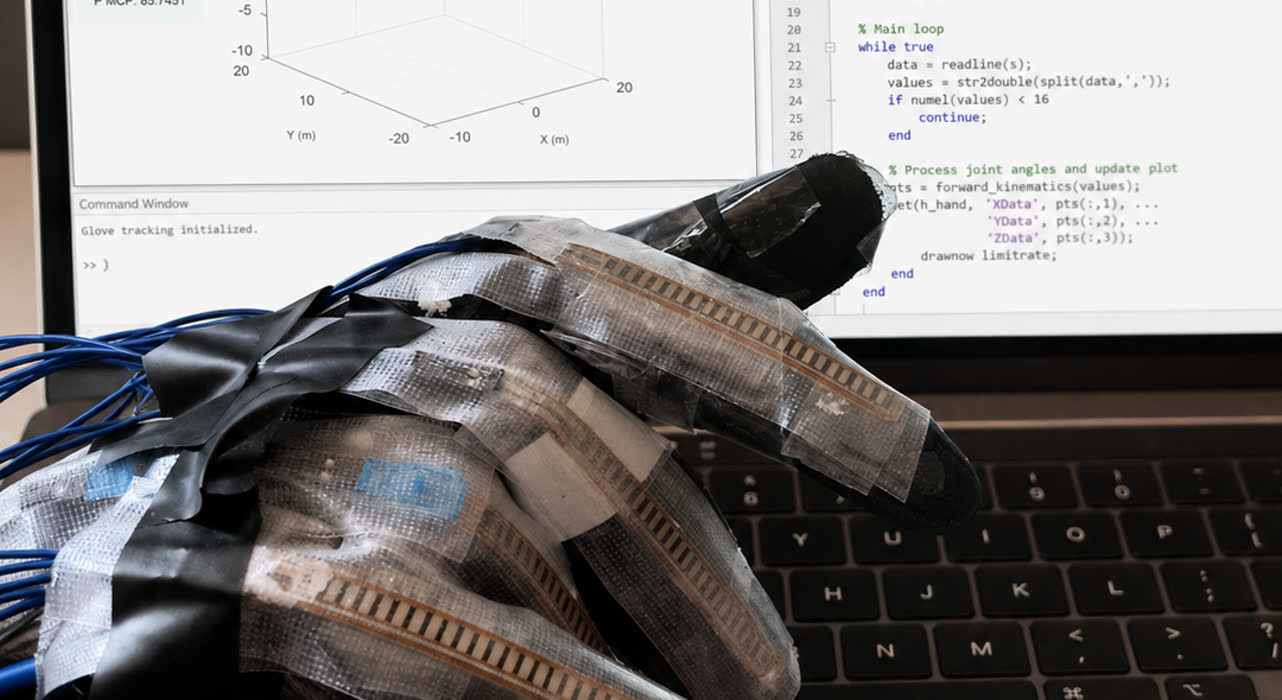
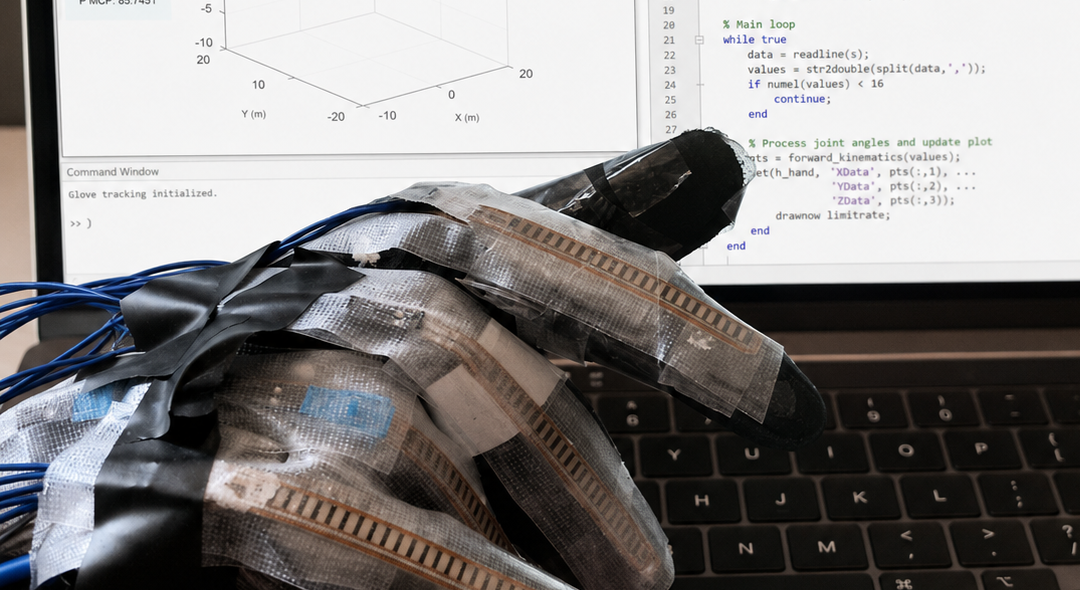
3D Modeling of Instrumented Gloves for Sign Language Recognition
Neuromuscular Control and Biomechanics Laboratory · University of Alberta
Designed a flex sensor, IMU, and EMG glove for real-time 3D hand modeling, validated against a VICON motion capture system. Led to a conference publication.
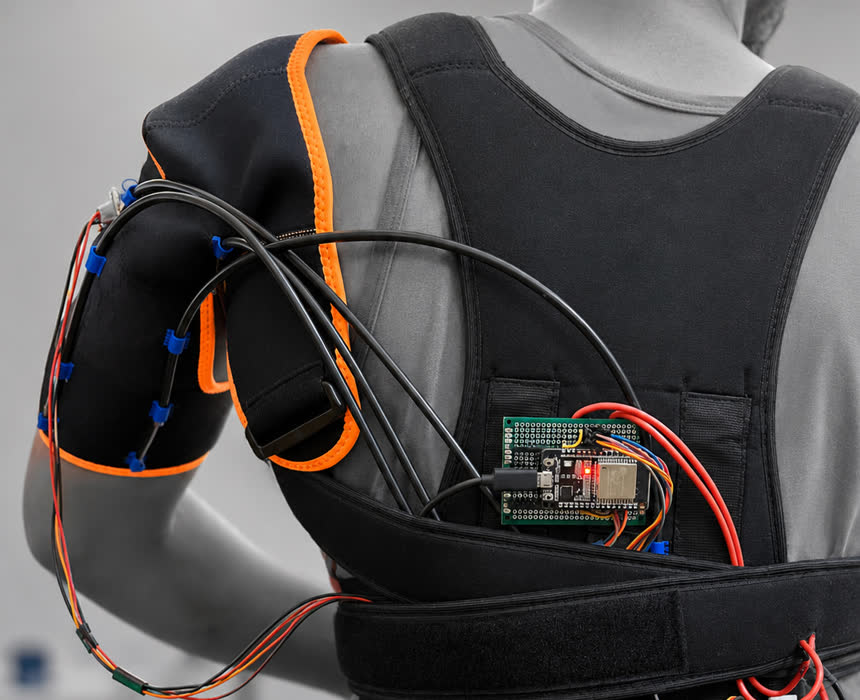
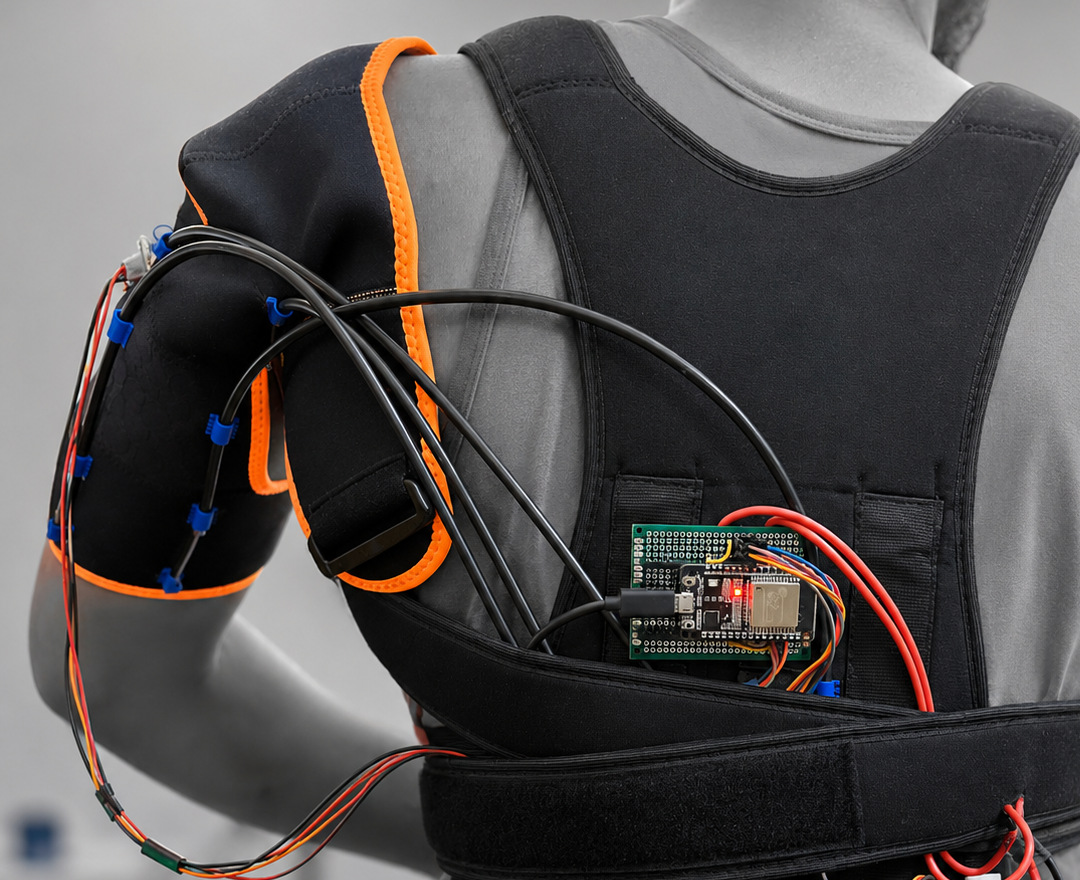
Shoulder Exoskeleton for Rehabilitation
Biomechatronics Neuroprosthetics and Exo Lab (BioNEX) · IIT Madras
Developed a 2-DOF soft shoulder exoskeleton with Bowden cable-driven PID control and IMU feedback, demonstrating 26% faster target acquisition in user studies.
Course & Selected Projects
CS234: Reinforcement Learning
Sample-Efficient RL via World Foundation Models for Synthetic Demonstrations
Finetuned Cosmos Predict 2 on 10 expert demos to generate synthetic robot trajectories, then trained Diffusion + residual RL policies using a PEM + IDM labeling pipeline. Found that strong video generation does not guarantee useful policy data due to physical alignment challenges.
CS329H: ML from Human Preferences
Learning Actionable Affordances from Pairwise Human Preferences
Trained a Bradley-Terry preference model on frozen DINO embeddings to produce dense affordance heatmaps that highlight graspable regions from pairwise human judgments, without dense labels or retraining the base encoder.
CS225A: Experimental Robotics
CookieBots: Autonomous Cookie-Making with Stretch Robots
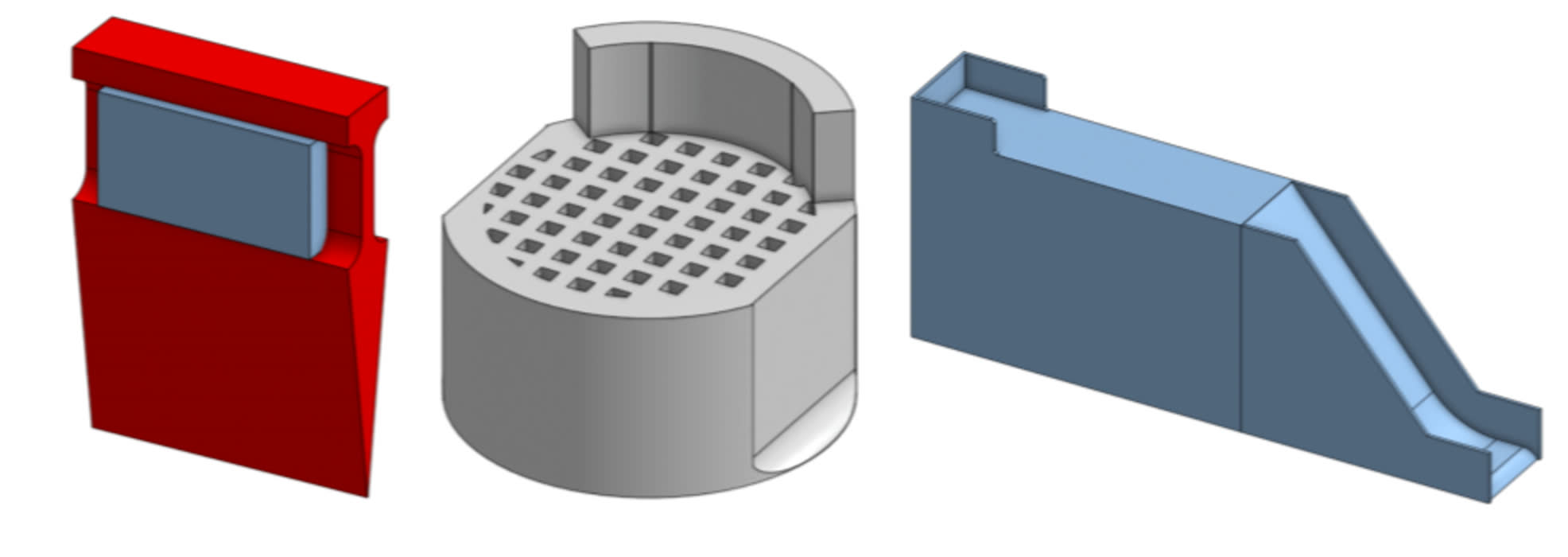
Automated a full cookie-making pipeline on two Hello Stretch robots: cutting, placing, and flattening dough. Designed three custom multi-purpose end-effectors and a vision pipeline using SAM2 and Grounded DINO for reliable dough detection and robot guidance.
CS237A: Principles of Robot Autonomy I
Frontier Explorer Robot: Autonomous Navigation and Mapping
Built a frontier exploration and SLAM system for autonomous TurtleBot navigation using ROS2, A*, RRT*, LQR gain scheduling, EKF, and LiDAR-based ICP mapping.
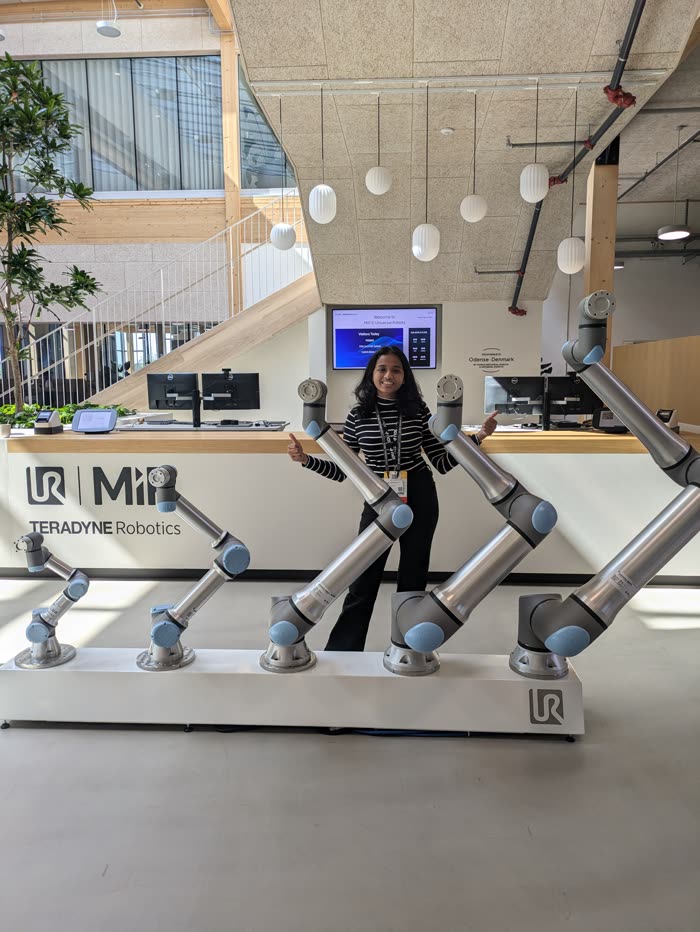
Elite Robotics Summer School, University of Southern Denmark
Real-Time 6D Pose Estimation for Robotic Assembly
Developed 6D pose estimation pipelines using YOLO + SAM and PnP + ICP, achieving 30+ brick poses in under 3 seconds with ~1.2 cm error, validated via ADD/ADD-S metrics.
CME213: Introduction to Parallel Computing
Adaptive Visual Token Compression for Efficient CLIP Inference
Studied training-free visual token compression for CLIP-ViT-B/16 by pruning patch tokens after an early transformer block. Implemented fixed and adaptive (entropy + fusion) compression, a custom CUDA token compaction kernel, and an MPI multi-GPU evaluation pipeline. 75% token retention preserves most accuracy (53.55% vs 55.48% top-1 on ImageNetV2); 4-GPU MPI scaling achieves 3.53x speedup at 88.4% efficiency.
Stanford University
RoboDelivery: Q-Learning for Autonomous Package Distribution
Implemented Q-learning with epsilon-greedy exploration for autonomous warehouse robot navigation using a 500-state Markov Decision Process for dynamic package delivery.